Human authority has become infrastructure for demand
To move the business, move through people. We have spent years treating creators as amplification, a way to make a brand message travel further. That view is too small. Their real value is that they create two kinds of return.
- In the short term, they move products. Across 52 markets, L’Oréal found that campaigns pairing brand and creator assets delivered 35% higher ROI.
- In the long term, they build the brand. In a WPP and IPA study covering 220 econometric analyses across 144 brands and 28 markets, creators returned 51% more than the average media channel over two years.
Demand now. Preference that lasts. That is a much bigger job than amplification, and they are doing it inside the same place where people buy.
Culture reaches the checkout faster than it reaches the brief
What gains momentum on a Tuesday can be sold out by Friday. We watched one of these up close. Labubu is a small vinyl monster made by POP MART. It became a phenomenon when people started hanging it off their handbags and everyone else decided they needed one.
By mid-2025 that had produced more than 68,000 videos posted under the hashtag, 1.1 billion views of Labubu content on TikTok in the UK, and an 819% rise in POP MART’s orders between March and May, all reported by TikTok itself.
No brief predicted that. Sixty-eight thousand people made those videos because they wanted to. The demand formed in public, in real time, in the same place where it could be bought.
Which is why moving at the speed of culture is a commercial advantage, not a creative preference. Insights, trend reads and briefs traditionally take weeks. The moment lasts days. The brands that capture it are not the ones waiting to jump on culture. They are already inside it, and built to move while it is still happening.
Selling through shoppable content requires a different skill set than going live, where creators need to think on their feet, react in real time and make the product feel authentic without a script.
The sale is where the next campaign starts
A creator demonstrates a product. Someone buys it. That customer leaves a review. The review answers the next person’s doubt. Someone posts about the experience, and another person discovers the product through that post. The evidence created by one sale helps create the next.
So the commercial value of influence is not only what it converts today. It is what it makes easier to convert tomorrow.
Live shopping makes this visible in real time, and it has nothing to do with the teleshopping channel it keeps being compared to. Entertainment first, with commerce running inside it. People enter because they follow the host, because someone told them there was something worth seeing, or because the algorithm placed the live in front of them mid-scroll.
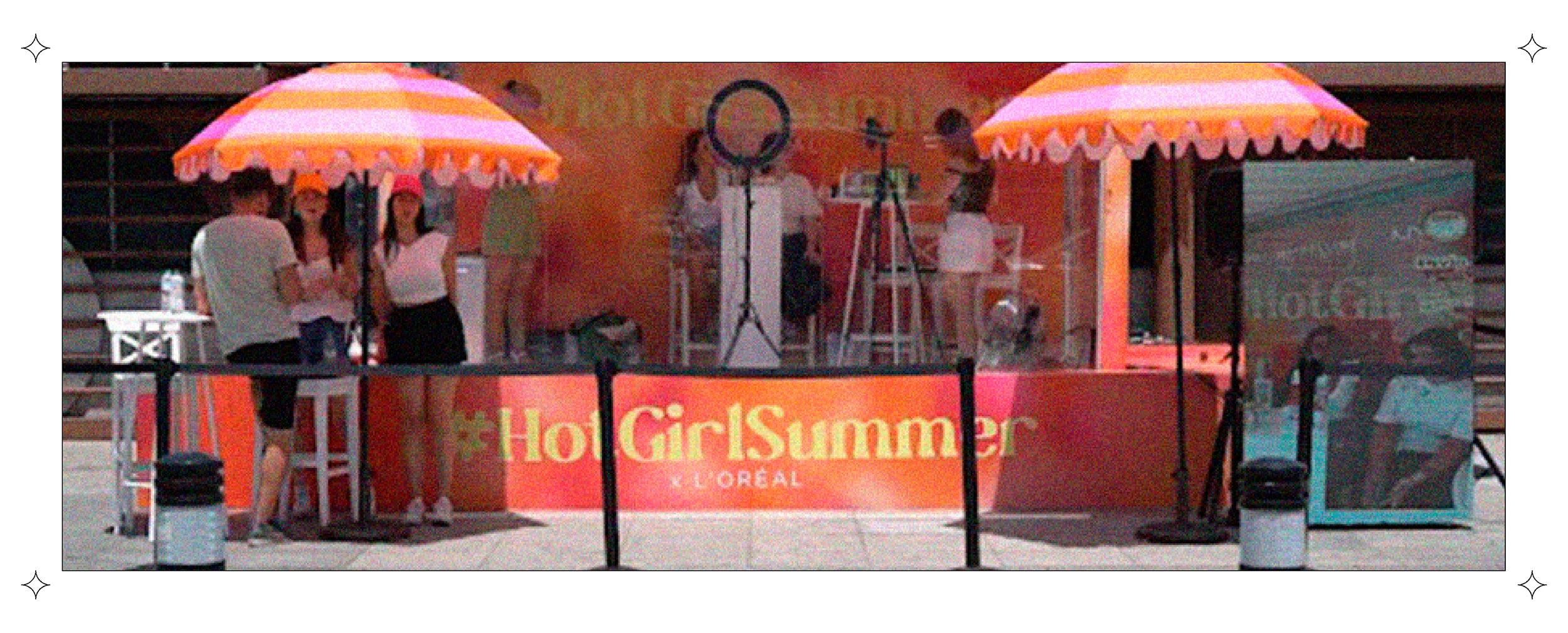
This summer, SAMY brought TikTok Shop’s LIVE Shopping experience to the streets of Madrid, connecting L’Oréal’s beauty brands with creators and consumers. From creator coordination to content, we turned social commerce into a live, IRL experience.
Then someone asks the question everyone else was thinking. The host answers it. Another asks for a comparison. A doubt becomes an explanation, the explanation becomes confidence, and confidence becomes a purchase. Discovery, persuasion, objection handling and conversion, in the same room, in the same hour.
Not everyone can host that. The industry still casts creators as if selling were one skill. We keep seeing creators who sell beautifully in shoppable content go quiet on a live, because live asks for something else: reacting in real time, leaving the script, making the product their own while a room watches.
Creator strategy, affiliate, reviews and live commerce often live in separate teams, each optimising its own role. The result? A fragmented approach where the connections and value between them get lost.
And every question is research arriving while you can still act on it. The objections people repeat are what your next piece of content has to answer. What sells out is where demand is building.
What they ask you to compare against is how they understand the category. No brief gets that back in a week. Commerce does not only capture demand. It produces intelligence.
The value also keeps building after the room closes. Haus, running hundreds of incrementality experiments, found that products advertised on TikTok keep selling on Amazon and in physical retail. Measured across every channel rather than direct-to-consumer sales alone, TikTok delivers 1.9 times the value it appears to.
A purchase creates experience. Experience creates evidence. Evidence reduces uncertainty for the next person. The first sale was never the point. The next hundred are.
Nobody owns the loop
Which makes this an organisational problem before it is a marketing one. Creator strategy sits with the brand. Affiliate sits with ecommerce. Reviews sit with CRM. Live sits with whoever agreed to run it.
Each team optimises its own piece while the value between them disappears. Questions asked in a live never reach the team writing the next brief. Reviews are treated as sentiment signals instead of intent evidence. Commerce data reaches the ecommerce team and stops there.
So the loop breaks.
And the cost of leaving it broken is rising. Someone asks an AI assistant which product to buy, and the answer comes back assembled out of what other people already said. Human evidence now travels much further than the people who created it, which makes credible authority more valuable, not less. AI can scale influence. People still create the reason to believe.
That is why treating social commerce as a conversion layer at the bottom of the funnel is so expensive. Connect it, and it stops behaving like a tactic at the end of a campaign. It starts behaving like a growth system.
Measure it like one
If influence moves through people, measurement has to follow it.
Promo codes and affiliate links do a real job. They tell us who drove a first purchase. They were never designed to tell us whether that customer came back, left a review, recommended the product, or brought someone else with them.
Which is the problem. Creators produce two kinds of return, and most measurements are built to see only one of them. We count the sale and lose the preference, then decide what creators are worth using half the evidence.
So the question gets bigger. Not did creators sell. Did human influence make more people want us, choose us and choose us again?
The brands that grow fastest in social will not be the ones with the largest creator rosters. They will be the ones that can follow a single customer from a comment to a purchase to the next person that customer convinces. That is an operating model decision before it is a media decision, and it belongs on the CMO’s desk.
Marketing will always be about moving people. Social has changed the route. Culture moves through people. Trust moves through people. Commerce increasingly does too.
Demand now. Preference that lasts. When a sale creates the evidence that helps create the next one, influence stops being something marketing buys and becomes something the business compounds. Move through people, and you move the business.