The discomfort wasn’t with the artificiality of the model, but with the feeling of being sold to by something we were never told was there. No craft, no honesty, no respect for their attention.
The verdict should be on advertising, not AI
The stat: 1.77 billion people use an ad blocker
Because think about it. Nobody in that comment section was defending the authenticity of fashion photography. Fashion photography! An industry that has spent decades politely selling fake perfection in its shiniest packaging, stretching and reshaping every model in front of the camera. So if it wasn’t the fakeness, what was it?
And slowly it landed. People weren’t angry that the model was synthetic. They were angry about the feeling underneath: being sold to, by a machine, without so much as a heads-up. No craft, no honesty, no respect for their attention. My conclusion is that this is not a verdict on AI. This is a verdict on advertising.
For me, that was the first building block: people don’t hate AI. People hate ads. AI, used badly, is just the fastest ad-making machine ever built.
Okay, random fact. Some 1.77 billion people use an ad blocker (!). A third of humanity, for crying out loud, paying with effort and often money to see less of what our industry makes. Let that sink in. And when the US consumers got asked about AI in advertising, more than half said they distrust AI-generated ads.
But the number nobody quotes sits in the same report: receptivity to advertising went up, from 47% to 58% in a year. So no, people are not allergic to brands. They are allergic to being interrupted, tricked and wallpapered. No wonder people have a natural aversion to AI and ads.
Real isn’t a property of the asset. It’s something an audience gives you when you’ve earned it. The backlash wasn’t about synthetic content; it was about content nobody could love.
Which brings me to the question CMOs ask me most: “Will consumers ever accept an influencer who isn’t real?” I believe that’s the wrong question, because we have always loved people who don’t exist.
Mickey Mouse has been selling merchandise for almost a century. James Bond sells watches, and vodka from behind a face that changes actors every decade. Lil Miquela has been posting since 2016, fronting campaigns for Prada and Calvin Klein, followed by millions who know exactly what she is. Aitana López, built by Barcelona agency The Clueless, makes up to €10,000 a month in brand deals.
While writing this, I asked Claude to come up with insights around authenticity. It showed me Kleine Sofie en Lange Wapper, a Dutch classic kids book I hadn’t thought about in thirty years, where a sick girl’s toys come alive at midnight. They are real for one reason: she loves them.
Read that again, but as a marketeer. Real is not a property of the asset. Real is something an audience does to you, when you’ve earned it. And that is exactly where last year’s backlashes went wrong. Not because the content was synthetic. Because nobody could possibly love it.
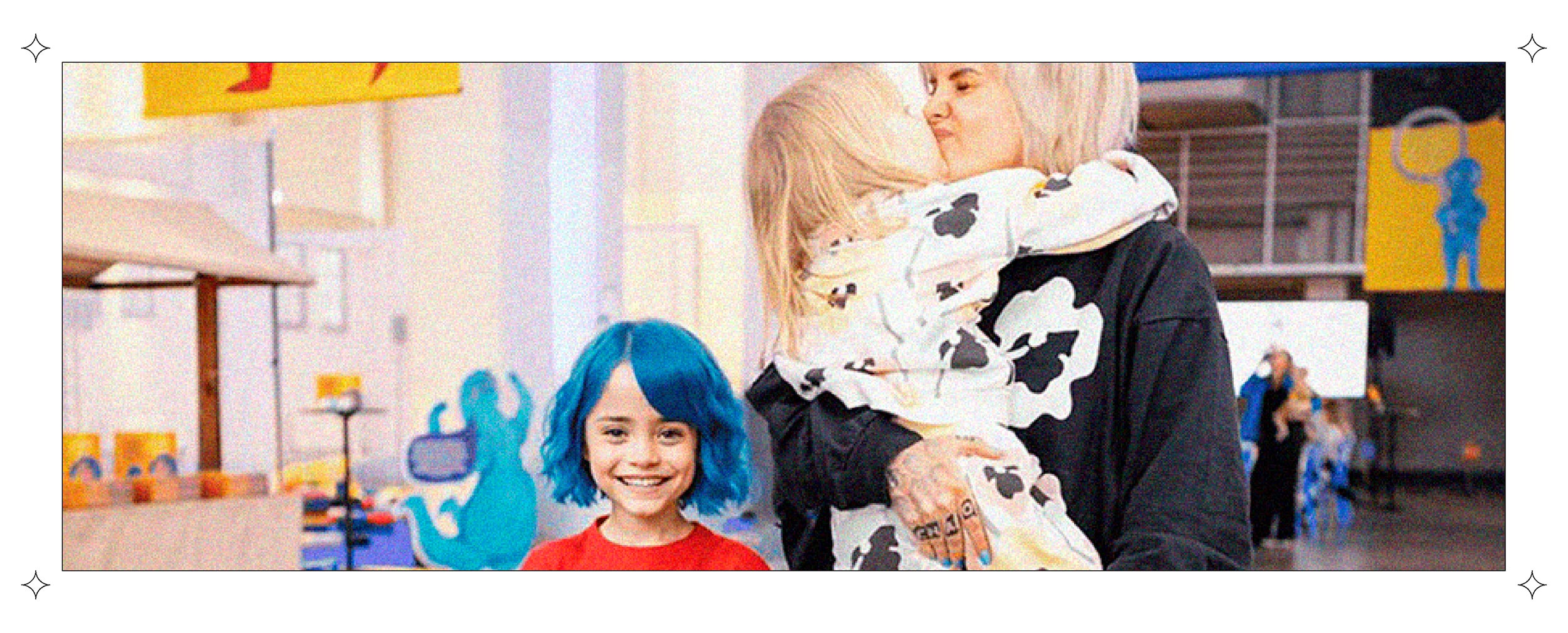
At SAMY, we brought Helena, an illustrated protagonist, to life as a 3D avatar, turning a children’s book into a social-first story with impressive results (See the case here).
Audiences ban deception, laziness, and theft
Guess and Vogue got hammered because the AI model added nothing. No story, no character, no ambition. Just a cheaper way to fill a page that used to pay photographers, stylists and models. And worse: they asked the machine to dream up yet another impossibly flawless woman. Old selling female “beauty”, printed onto a brand new medium.
Tilly Norwood, the “AI actress”, got torched by SAG-AFTRA and half of Hollywood because she was pitched to studios as cheaper talent. Acting, reduced to a cost line. Everyone could smell it.
Now look at H&M. They built digital twins of 30 real models. Consent, compensation and control stayed with the models, and every AI image was watermarked and labelled. Controversial? Sure. But it stayed a debate instead of a backlash, because nobody was deceived, nobody was robbed, and somebody clearly cared.
That is the whole rule, audiences don’t punish synthetic. They punish deception, laziness and theft.
A medium has no values of its own. It simply amplifies what we put into it, our honesty or lies, our progress or biases. AI is no different. The real question is: what values will we choose to print on it?
I talked to my girlfriend a lot while writing this. Not only because she is (of course) always right, but because her study background in film science comes in quite handy here. She told me the world has been here before. In 1935, when machines had just learned to make images, a philosopher called Walter Benjamin panicked that all this mechanical copying would kill what he called the aura of art.
The magic. Sounds familiar, right? And what happened? The aura simply moved. Painting survived. And cinema, the soulless machine format of its day, became the art form of the century.
Here is the lesson under that lesson: a medium has no values of its own. The printing press printed poetry and propaganda with the same enthusiasm. Film amplified the prejudices of its age for decades. Every new medium is a printing press for values. It prints whatever we set in type. Our honesty or our lies. Our progress or our biases. AI is simply the next acceleration, and the only real question is which values we choose to print on it.
That is why I stopped calling synthetic creators “fake influencers”. They are a new format, closer to animation and fiction than to celebrity endorsement. The strategic mistake is using that format to make the old thing cheaper. The moral mistake is printing our old sins onto it.
What I tell CMOs
“Build consent infrastructure before you build avatars”
So what do I say to CMOs lying awake fearing their own Guess moment? The backlash, the likeness lawsuit, the feed of cheap synthetic content wearing their logo?
First: fear is not a strategy, and neither is a slogan. Google promised “don’t be evil” and quietly retired the phrase. Values only count when they are printed into the work. The good news: the values are not complicated. Most of us learned them.
Don’t lie. Since 2 August 2026, the EU AI Act requires clear disclosure of AI-generated content. Most brands will bury that in a six-point type. The smart ones will say it out loud, because in a feed drowning in undeclared synthetic content, “we tell you what’s real” becomes a trust position you cannot buy.
Don’t steal. Build consent infrastructure before you build avatars. The H&M setup, consent, compensation, control, is the template. Treat someone’s face like IP, because legally and morally that is what it is.
Don’t discriminate. Left on default settings, generative models reproduce the internet’s averages. Same faces, same bodies, same tired ideals that sank that Vogue page. Decide who appears in your synthetic worlds, or yesterday’s data decides for you.
And care. Visibly. If AI’s only contribution to your marketing is “cheaper”, people will smell it. Reinvest what the technology saves into the things people can actually love: better stories, better characters, better worlds. A synthetic creator is not a six-week activation. It is a character with a universe, and it lives or dies on love and retention, not reach. Measure it like a show, not like an ad.
Oscar Wilde saw the opportunity 130 years ago: “Man is least himself when he talks in his own person. Give him a mask, and he will tell you the truth.” An AI character is a mask. Masks can free a brand to tell truer, braver stories. But there has to be a hand behind the mask, and we have to be able to trust it.
So, does it matter?
Is it real? And does it matter?
A year ago I was typing angry comments in my head. Today my answer is: it matters enormously, just not in the way I thought.
Audiences will decide which synthetic creators become real, and they will use the oldest criteria in the world. Does this add something to my feed or take something from it? Does it respect me enough to tell the truth? Did somebody, somewhere, love this thing enough to make it worth my time?
Strip everything back and authenticity was never about the technology. It is about intent. Was this made honestly, by people trying to do something good?
People don’t hate AI. People hate ads. AI just made the difference impossible to ignore.
Beneath every “AI sucks!” comment there is a briefing for our whole industry, and it reads: stop making ads. Start making things that are worth it.