The real challenge begins when a global team needs a quick answer and finds none. The work has been done, but the data is spread across 15 disconnected systems that were never designed to work together.
It’s not volume. It’s fragmentation
An easy-to-understand example
Picture a global food brand running influencer marketing in 15 countries. Spain has its own creator base. Brazil has another. Germany, another. Every market picks its own agency, its own scouting tool, its own way of negotiating fees, its own brand-safety rules, its own report template.
Every one of those decisions makes sense on its own. The local team knows its culture, its platform, its timing.
The trouble starts the moment someone at a global level asks a question that should have a fast answer. Who are our best creators, across every market? Are we paying similar fees for similar profiles? What did Spain learn that Brazil should know? Are we even measuring “success” the same way twice?
Nobody has a fast answer. Not because nobody did the work. Because the work lives in 15 systems that were never built to talk to each other.
Build the shared strategy first. Align the criteria and playbooks globally, but let each market create its own local relevance.
Don’t think about campaigns. Think like an orchestra
Barilla and Unilever are great examples
This is the shift we think CMOs should start pushing their partners toward. Stop asking for global campaigns. Start asking for global infrastructure.
We saw it up close this year with Barilla. When the brand made us its global influencer partner, the work launched almost simultaneously in markets that couldn’t be more different: Italy, Brazil, Germany and Switzerland for Barilla; Sweden, Denmark and Italy for Wasa.
The only way that works without every country reinventing the wheel: build the shared strategy first. Same criteria for choosing creators. Same playbooks. Same way of tracking a campaign. Then and only then let each market decide the tone, the content, the actual creator.
Unilever’s Foods business runs on the same logic, at a different scale. Thirteen markets. Hellmann’s, Knorr. One technology layer underneath all of it: Maia, our own AI-powered platform, unifying paid social, influencer activity and owned media into a single environment.
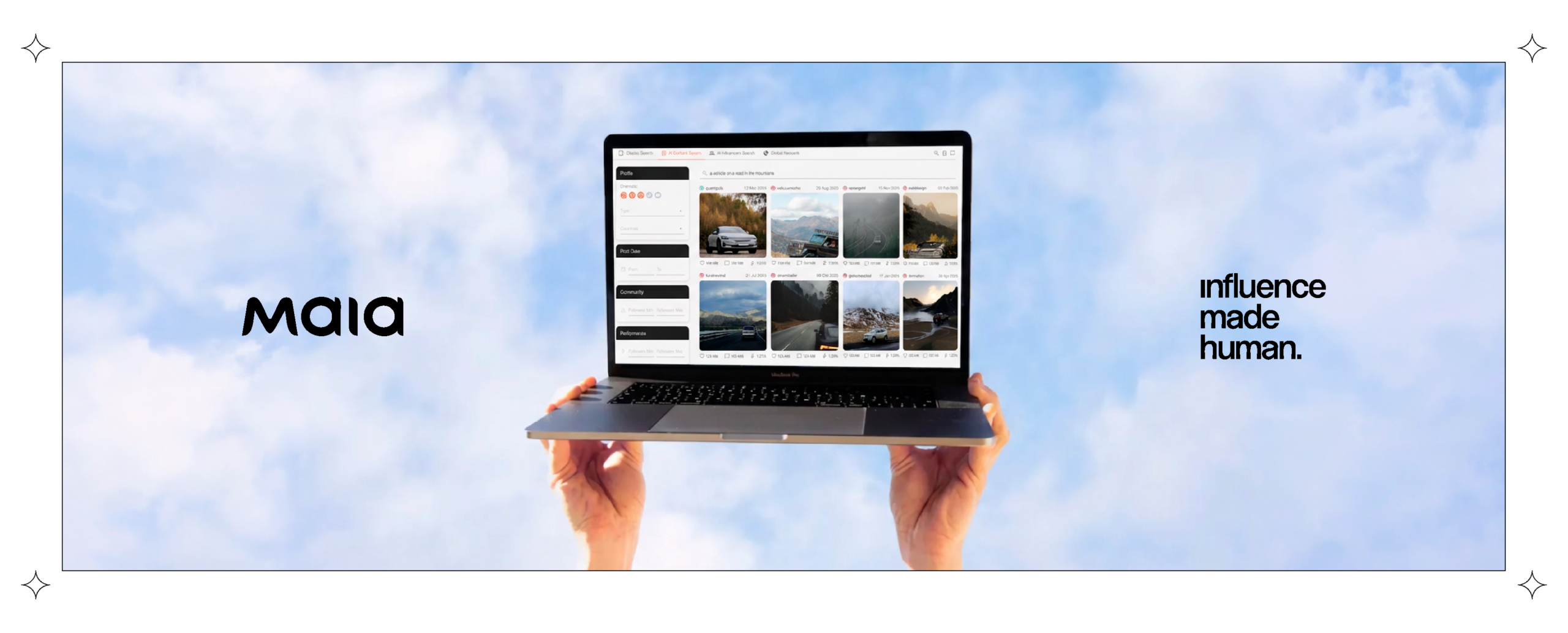
Every market plugs into the same data, the same relevance benchmark, the same visual-search tools for vetting creators and catching brand-safety issues instead of building that from scratch, country by country.
That’s not a nice-to-have. Unilever has said publicly it plans to work with 20 times more creators and move half its media budget into social media. At that scale, fragmentation stops being an inconvenience. It becomes a business risk. There is no version of managing twenty times more creators across thirteen markets without something shared holding it together.
Here’s roughly how we’d draw the line between what should be global and what should stay local:
- Global: the technology, the data, how you measure, brand safety, the workflow from briefing to reporting, and visibility into what every market is doing.
- Local: who the actual creator is, the culture, the platform that matters this year, the tone, the relationship, the fee, the timing.
Call it orchestration, not standardization. Standardization means everyone plays the same note. Orchestration means everyone plays from the same score and each market still plays its own instrument.
Don’t globalize the relevance
This is where most brands get it backwards. They confuse shared infrastructure with shared creativity.
A creator who lands in Italy can say nothing in Germany. A benchmark that looks great in Brazil can look mediocre in Switzerland. TikTok isn’t the same platform in every market where Barilla operates, forcing one content approach across all seven would have been a mistake, plain and simple.
Infrastructure should be global. Influence should stay local.
Global gives you the system. The market gives you the context. Obvious on paper. Almost nobody has actually solved it operationally which is exactly why it’s worth saying out loud.
From managing campaigns to owning intelligence
This is the part we’re most excited about over the next two or three years.
Once every market runs on the same infrastructure, same process, same measurement, same access to data. You stop having isolated campaigns. You start having something worth much more: a body of knowledge that only grows the longer you keep it together. Which creators actually deliver, against which goal. What a given kind of profile should reasonably cost. Which platform-and-format combinations work, and which don’t travel at all.
The next step writes itself. Global teams stop digging manually and start simply asking: who performed best for a Gen Z beauty campaign in Europe last year? And getting an answer built on every campaign they’ve ever run is not a guess, not one market’s opinion.
That’s the moment influencer marketing stops being an operational job and starts being a real competitive edge.
Global brands need a real platform, not a patchwork of local agencies. A tool like Maia provides the shared backbone to connect local expertise, strategy and execution, without losing what makes each market relevant.
Somebody has to build it, right?
None of this happens by wanting it. A brand can decide, on a slide, that it wants shared governance and cross-market visibility. Somebody still has to build that layer and run it, every day, across every market, every campaign, every creator contract.
That’s exactly why we think global brands increasingly need a partner running on a real platform, not a patchwork of local agencies loosely pointed in the same direction. It’s not about replacing what local teams know. It’s about giving what they know a shared backbone to plug into.
For us, that’s Maia, what we call, internally, an AI-powered orchestration hub. Every market works off the same data, the same relevance benchmark, the same tools for vetting a creator or catching a brand-safety issue instead of “consistency” meaning one person in Global manually chasing fifteen spreadsheets.
The agency’s job stops execution. It becomes owning the infrastructure, the thing most CMOs simply don’t have the internal headcount to build and hold together themselves, market by market.
To sum up: What would we tell any CMO today?
The future of global influencer marketing isn’t a choice between consistency and relevance. That’s a false choice, and every brand that keeps framing it that way will keep losing time and budget to it.
The brands that win will build both at once. Shared data and governance at the top. Real cultural freedom underneath. And a partner that can actually run that system, not just talk about it.
Brands don’t need to do more influencer marketing. Most are already doing plenty. What they need is to stop scaling volume ahead of infrastructure, and start building a system that will have to carry that scale for the next three to five years.
Build the infrastructure, and the scale takes care of itself.